tree-service
Tree Trimming Cost in Nevada: Palms, Desert Trees, and Mountain Pines Priced for 2026
Tree trimming prices in Nevada for 2026: palm trimming in Las Vegas, mesquite and mulberry costs, Reno cottonwoods and pines, Tahoe defensible space, and licensing.
In This Article
Tree Trimming Cost in Nevada: Palms, Desert Trees, and Mountain Pines Priced for 2026
Palm trimming is the single most common tree service call in Nevada, and it runs $75 to $250 per palm in 2026 for a standard frond and seed pod removal on a tree under 30 feet. Tall palms over 40 feet, which line older streets in Las Vegas, Henderson, and Boulder City, cost $250 to $500 each because they require a bucket truck or a climber with spikes. Shade trees are priced separately: $200 to $500 for a medium mesquite, palo verde, or African sumac, and $500 to $1,200 for a large mulberry, ash, or elm.
Nevada's two population centers have almost nothing in common when it comes to trees. Las Vegas and the rest of Clark County are Mojave Desert, where the trees are palms, drought-tolerant natives, and a stubborn population of water-hungry mulberries and ashes planted decades ago. Reno, Sparks, Carson City, and the Tahoe basin are high desert and mountain, with cottonwoods, poplars, and pines, and the trimming market there is shaped by wildfire defensible space rules more than anything else.
Palm Trimming in Southern Nevada
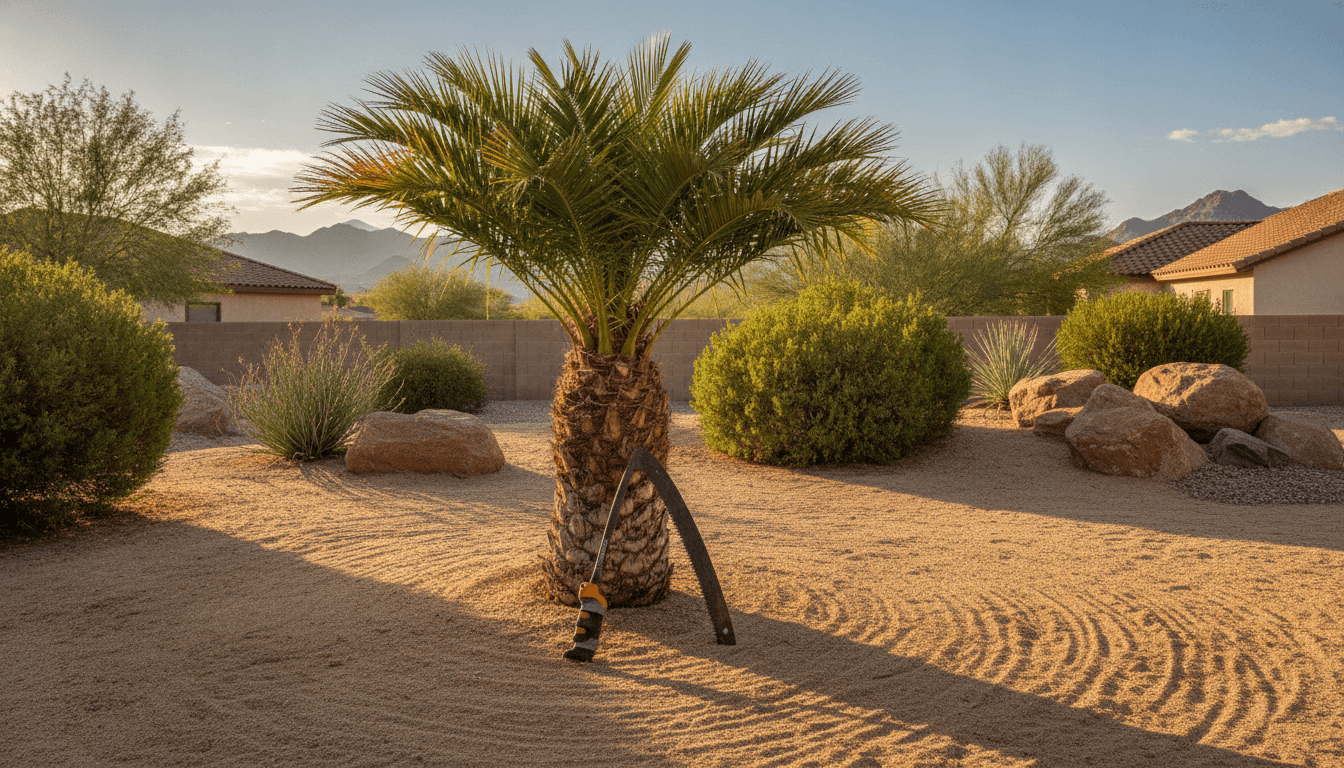
A standard palm trim removes dead and dying fronds, seed pods, and flower stalks, and leaves the crown at roughly a 9 to 3 o'clock spread. Mexican fan palms, which are the tall skinny ones, cost $75 to $150 each under 30 feet and $200 to $400 above 40 feet. Date palms and Canary Island date palms, with their heavy crowns and sharp spines, cost more at $150 to $350 for a medium tree and $400 to $700 for a large one.
Skinning, which removes the old frond bases from the trunk for a smooth look, adds $100 to $300 per palm and is mostly cosmetic. Removing a full skirt of dead fronds from a palm that has not been trimmed in years costs $200 to $500 because of the volume and the risk of rats and scorpions in the skirt.
Most Las Vegas companies discount per palm when there are several on the property. A row of six Mexican fan palms might be quoted at $90 each rather than $125. HOA communities in Summerlin, Green Valley, and Anthem often coordinate palm trimming across a block for the best rate.
When to Trim Palms in Las Vegas
June is the traditional palm trimming month in the Las Vegas Valley, after the seed pods form and before the worst heat. Trimming once a year is enough for most palms; trimming twice, or cutting green fronds to make the tree look tidier, weakens it. A company that recommends the "pineapple" cut with all but a few fronds removed is doing the tree harm.
Prices rise in June because of demand. Booking in April or May for a late May slot often saves 10% to 15%.
Shade and Desert Trees in Las Vegas and Henderson
Mesquite and palo verde are the workhorse desert trees in newer Las Vegas neighborhoods, and both grow fast and drop limbs in monsoon winds if not thinned. A medium mesquite trim runs $200 to $450, and a large multi-trunk mesquite with a wide canopy costs $450 to $800.
Palo verde is similar. Thinning for wind resistance, which reduces the sail effect before the July and August storms, is the most useful trimming these trees get.
African sumac, Chinese elm, and Chilean mesquite are the mid-sized shade trees in the older suburbs, and they run $250 to $600 to trim. Mulberries and Modesto ash, which were planted widely in the 1970s and 1980s in the older parts of Las Vegas and Henderson, are the largest trees in the valley and cost $500 to $1,200 to trim properly. Many are declining from age and water restrictions, and the trim often turns into a removal conversation.
Pines, including Aleppo, Mondell, and Italian stone pine, are common in older neighborhoods and cost $400 to $1,000 to trim depending on height.
Water Restrictions and Tree Health
Southern Nevada Water Authority rules on turf and irrigation have changed how trees are watered across the valley, and stressed trees are more prone to limb failure. A tree service that offers deep root watering or fertilization alongside trimming is responding to a real problem, though the add-on costs $75 to $200 per tree and is not always needed.
Trimming a drought-stressed tree hard makes things worse. Ask the crew to keep the cut to 20% of the canopy or less.
Northern Nevada: Reno, Sparks, Carson City, and Tahoe
Cottonwoods and Lombardy poplars line the older neighborhoods of Reno and along the Truckee River, and they are the most expensive trees to trim in the north. A large cottonwood runs $700 to $1,600 because of its size and brittle wood.
Silver maples, elms, and honey locusts in the older parts of Reno and Sparks cost $300 to $800. Fruit trees in Carson Valley and Minden orchards run $100 to $250 each.
Pines dominate the Tahoe basin and the slopes above Reno, and pine trimming is priced by height: $300 to $600 for trees under 40 feet and $600 to $1,500 for the tall Jeffrey and ponderosa pines that shade homes in Incline Village, Kings Beach, and South Lake Tahoe. Limbing up the lower branches for fire clearance is the most common request.
Access matters more in the north. Steep lots in the Tahoe basin, Galena, and the foothills above Reno add 15% to 30% for the extra rigging and slower work.
Defensible Space Requirements
Nevada Division of Forestry and the local fire districts around Tahoe, Reno, and Carson City push defensible space, and homeowners in the wildland-urban interface face inspection in some jurisdictions. Limbing trees up 6 to 10 feet, removing ladder fuels, and thinning canopies so crowns do not touch are standard requests, and a full defensible space treatment on a half-acre Tahoe lot runs $1,500 to $5,000 depending on tree count.
Some fire districts and insurers offer cost-share or rebate programs for defensible space work, and the Tahoe Resource Conservation District has run one. Ask the tree service what programs are active.
HOA Rules and Street Trees
Many Las Vegas Valley and Reno neighborhoods sit inside HOAs with rules about tree height, clearance over sidewalks, and how palms are trimmed. Some HOAs require approval before removing a tree, and a few specify the pruning standard. Ask the HOA before scheduling, since a tree service will not know the rules for your community.
Street trees in the right-of-way are often the city's responsibility in Las Vegas, Henderson, and Reno, and the homeowner should check before paying to trim one. Trees on private property that overhang sidewalks must be kept clear to about 8 feet, and that clearance trim runs $100 to $250 per tree.
Emergency and Storm Work
Monsoon microbursts in Las Vegas and winter windstorms in Reno both bring down trees, and emergency rates run 1.5 to 2 times normal. Clearing a large limb from a roof or a downed mulberry from a driveway costs $600 to $2,000.
After a major storm, established companies are booked for days and unlicensed crews appear. Confirm insurance before letting anyone start.
Nevada requires a state contractor's license for tree work over $1,000 in most cases, and the Nevada State Contractors Board issues a specific classification for tree service. Ask for the license number and check it, and confirm general liability and workers' compensation.
Getting a Fair Quote in Nevada
Get two or three written quotes with the scope described: which trees, how much canopy will be removed, whether stumps or debris are included, and whether the crew will use spikes on trees that are not being removed. Spikes on a palm being trimmed are normal; spikes on a mesquite or ash being trimmed are not.
Per-palm and per-tree pricing beats hourly for most homeowners, since it removes the incentive to work slowly. Bundling all the trees on a property into one visit saves 10% to 25% over piecemeal trimming. You can compare local companies through the tree services listed for Nevada on this directory, and the Nevada home services blog has more on what other outdoor work costs across the state.
Frequently Asked Questions
How much does palm tree trimming cost in Las Vegas?
Standard Mexican fan palms run $75 to $150 each under 30 feet and $200 to $400 above 40 feet. Date palms cost more, at $150 to $700 depending on size.
When should palms be trimmed in Nevada?
Once a year, in late May or June after seed pods form. Trimming green fronds or cutting more than once a year weakens the palm.
How much does it cost to trim a mesquite tree?
A medium mesquite runs $200 to $450 and a large multi-trunk tree $450 to $800. Thinning before monsoon season reduces limb failure in wind.
What does defensible space tree work cost near Lake Tahoe?
Limbing and thinning on a typical half-acre lot runs $1,500 to $5,000 depending on tree count and slope. Some fire districts offer cost-share programs.
Do tree trimmers need a license in Nevada?
Yes, for jobs over $1,000 in most cases. The Nevada State Contractors Board issues a tree service classification, and you can verify it online.
Is it cheaper to trim trees in Reno or Las Vegas?
Palms and desert trees in Las Vegas are cheaper per tree because they are smaller. Large cottonwoods and pines in Reno and Tahoe cost more, and steep lots add to the price.